
Altnets vs Openreach: what's actually different
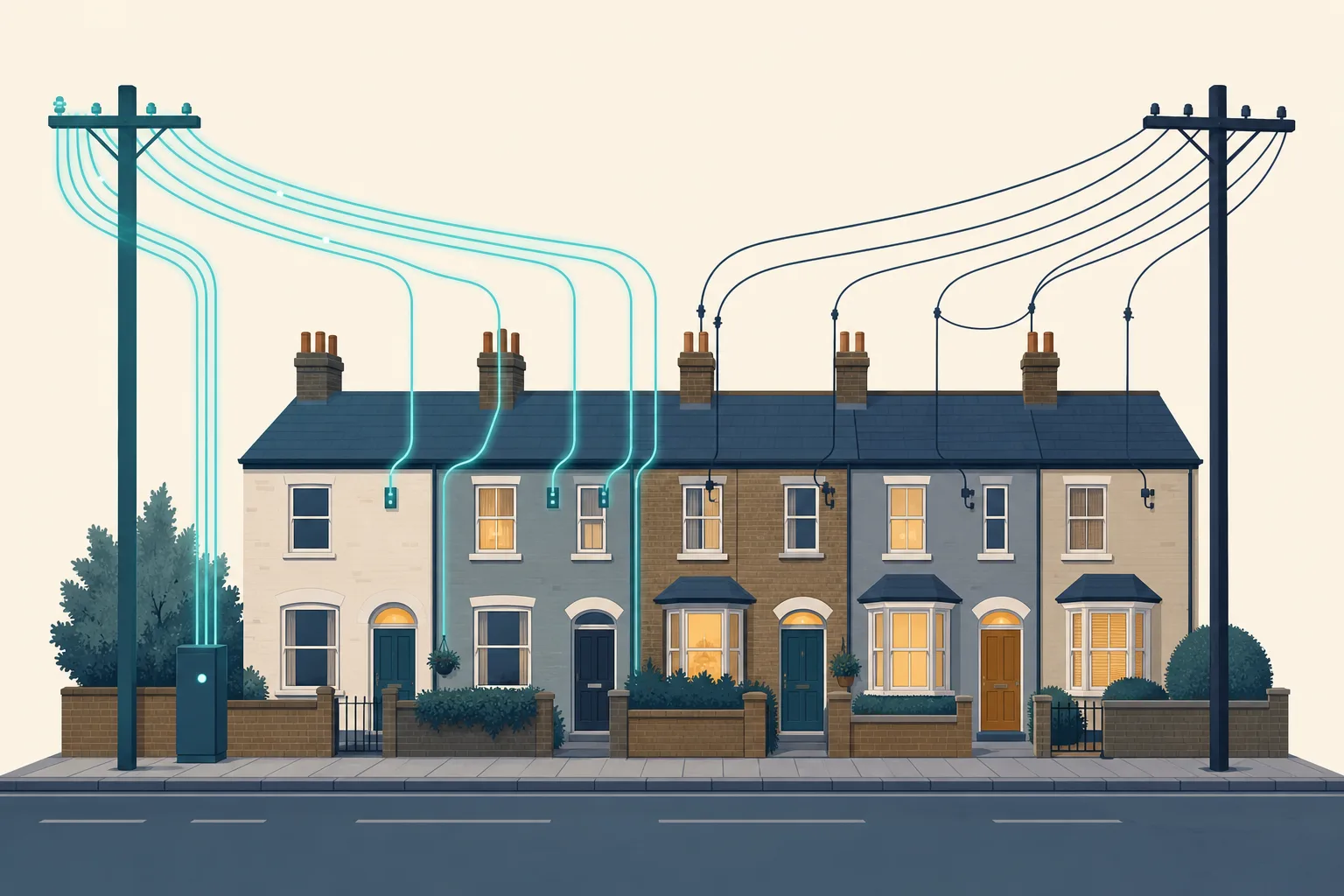
Here's the thing the adverts don't tell you: most of the UK's famous broadband brands don't own the network they sell you. BT, Sky, TalkTalk, Vodafone, EE and Plusnet all deliver home broadband primarily over Openreach's infrastructure. Different logos, different routers, same wires.
An altnet is the genuine article of an alternative: a company that dug its own trenches, laid its own fibre, and runs its own network. Understanding that difference makes choosing broadband much simpler.
The retailer vs the network
Think of Openreach as the motorway and the big brands as coach companies. They compete on ticket price and branding, but they're all subject to the same road. If the road has copper sections, every coach on it is limited the same way. When Openreach upgrades a street to full fibre, all its retailers can sell it; where it hasn't, none can.
An altnet built a private motorway next to the public one. It controls the whole experience: the fibre, the speeds it offers, the installation, the support. That vertical control is why altnets can move faster on speed tiers and price, and why their coverage is patchier.
Where altnets win
Price. Altnets have to give you a reason to leave a name you know. On the live pricing we track, entry full fibre starts from around £19 a month, and most of the networks we track sit between £19 and £26. Comparable big-brand full fibre typically costs noticeably more, and their cheapest headline deals are often not full fibre at all.
Speed ceilings. Several altnets offer residential speeds beyond the mainstream Openreach range. YouFibre sells up to 7 gigabits; Community Fibre and LightSpeed go to 5. Whether you need that is another question, but the headroom costs less than you'd expect.
Price certainty. Mid-contract price rises became standard across the majors. Multiple altnets simply don't do them: YouFibre, Zzoomm and LightSpeed fix the price for the full term, and most others publish fixed, dated increases upfront rather than inflation-linked formulas. We show each provider's policy plainly on its profile page.
Symmetry. Many altnets offer upload speeds equal or close to download, which matters for video calls, cloud backup and anyone working from home. Openreach-based retail packages are usually heavily download-weighted.
Where Openreach wins
Honesty matters here. Openreach's footprint is vastly larger, so a retailer on it can serve almost any address today. Openreach retailers also offer easy bundling (TV, mobile) that most altnets don't. And if you move house frequently, a national provider is more likely to serve your next address. None of these are reasons to avoid altnets; they're reasons the right answer depends on your address, which changes street by street.
The practical takeaway
Don't choose a brand first. Check what infrastructure reaches your address, then compare what's on it. If an altnet covers you, it will very often be the fastest and cheapest option available. Our checker does that in one step, and our guide to FTTP vs FTTC vs cable explains the technology labels you'll see along the way.
Frequently asked questions
Is Openreach the same as BT?
Openreach is a legally separate infrastructure company within the BT Group. It builds and maintains the network; it doesn't sell broadband to consumers. BT retail is one of many providers that rent its lines, alongside Sky, TalkTalk, Vodafone and others.
If altnets are cheaper, why doesn't everyone use one?
Coverage. An altnet can only serve streets where it has physically built its network, and many people simply don't know one covers their address. That awareness gap is the main thing keeping people on slower, dearer packages.
Can I keep my email address if I leave BT or Sky?
Switching broadband doesn't affect independent email accounts (Gmail, Outlook.com). Provider-issued email addresses vary: some providers let you keep the address for a fee, others close it. Check before you switch if your email is tied to your provider.