
Full fibre (FTTP) vs FTTC vs cable: what's the difference?
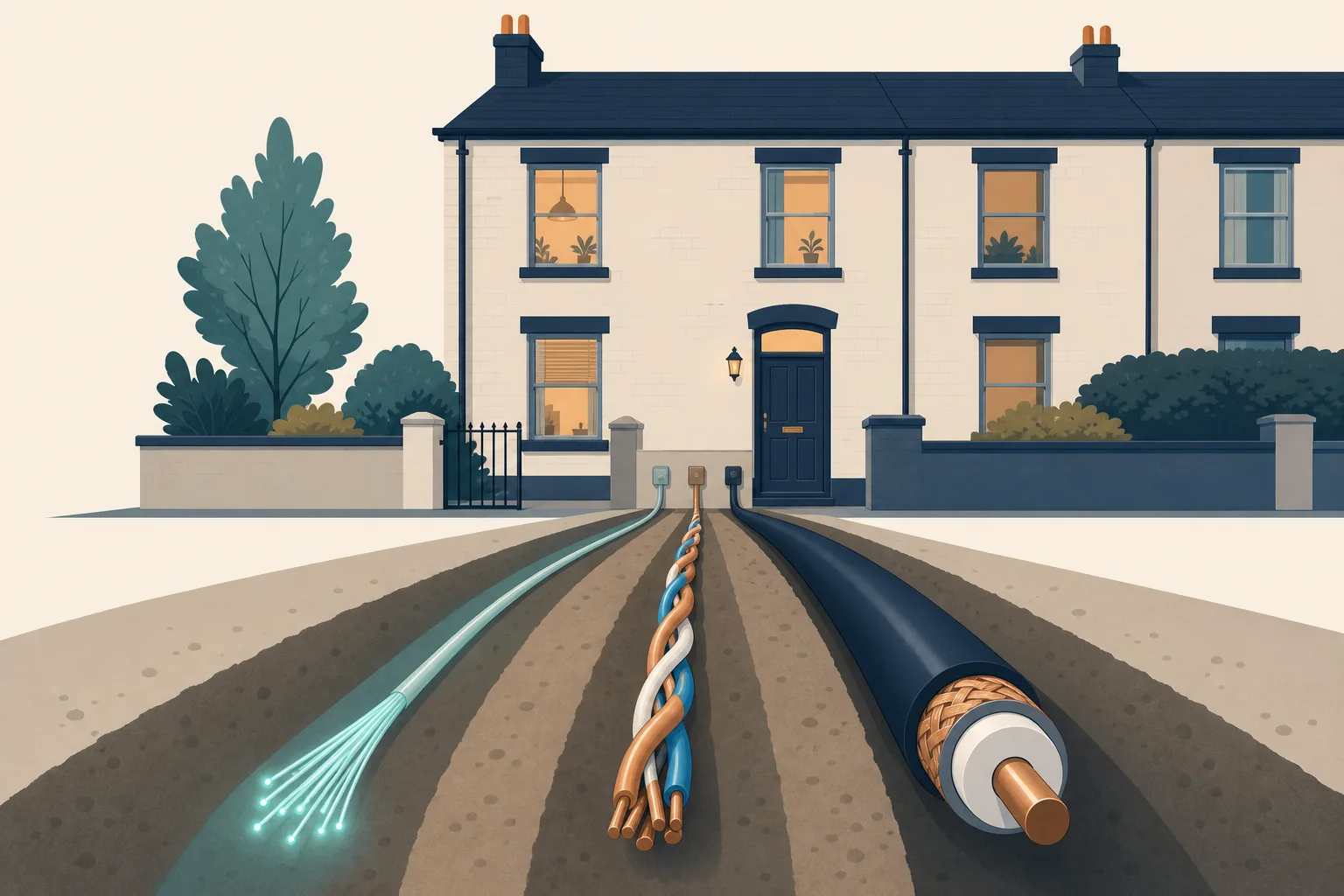
"Fibre broadband" is one of the most stretched phrases in British advertising. Three quite different technologies get sold under it, and the difference between them is the difference between 35 megabits and 7 gigabits. Two minutes here will save you buying the wrong one.
FTTC: fibre to the cabinet
Fibre runs from the exchange to the green cabinet on your street; the final stretch to your home is the old copper telephone line. Marketed for years as "fibre" or "superfast broadband", it typically delivers around 35 to 80 megabits down, far less up, and it degrades with distance from the cabinet. Where full fibre is available, FTTC is obsolete: often no cheaper, always slower. The copper network it relies on is also being progressively retired.
Cable (Virgin Media)
Virgin's network uses fibre plus coaxial cable for the final stretch. It delivers genuinely fast downloads, up to and beyond a gigabit, but uploads are typically a fraction of downloads, and the network is shared locally, which can mean evening slowdowns in some areas. It's a strong product where full fibre hasn't arrived, and increasingly Virgin is itself moving to full fibre.
FTTP: fibre to the premises, or "full fibre"
A fibre optic line all the way into your home, no copper anywhere. This is what nearly every altnet builds, and it's the end state the whole industry is moving to. What it gets you:
- Speed and headroom: from entry tiers around 100 to 150 megabits up to multi-gigabit packages. On the altnets we track, top residential tiers reach 5 to 7 gigabits.
- Symmetric or near-symmetric uploads: a big deal for home working, gaming, cloud storage and anyone uploading video.
- Reliability: fibre doesn't corrode, isn't affected by rain in the way old copper joints are, and delivers its advertised speed regardless of distance.
- Value: counterintuitively, full fibre from an altnet is often the cheapest broadband at an address. Entry deals on the networks we track start from around £19 a month.
How to tell what you have
Quickest tells: if your broadband comes through a telephone socket and a microfilter, or your speed is around 30 to 70 megabits, you're on FTTC or older. If you have a small white box (an ONT) with a fibre light on it, you're on full fibre. If your kit says Virgin Media, you're on cable or Virgin's newer fibre. Your provider's app or bill will also name the product.
What's worth upgrading to
If you're on FTTC and full fibre reaches your address, upgrading is close to a free win: more speed, usually similar or lower cost, no downside. The real question is which full fibre network serves you, and whether an altnet on your street undercuts the big names, which it usually does. Our postcode checker answers both at once, and our altnet explainer covers why the cheapest option is often a name you haven't heard of.
Frequently asked questions
Do I need gigabit speeds?
Most households are comfortable at 100 to 300 megabits, even with heavy streaming. Gigabit and above is for large households, serious home working with big file transfers, or simply future-proofing. The good news on altnets is that the price gap between tiers is small.
Is FTTP installation disruptive?
Usually not. An engineer brings the fibre from the street to a small box on your wall, typically in one visit of one to three hours. See our guide to switching for what happens on the day.
What happens to my landline on full fibre?
The old copper phone service doesn't exist on FTTP. If you want a home phone, providers offer digital voice services that plug into the router, usually keeping your existing number.