
VoIP home phone: the landline that needs a router
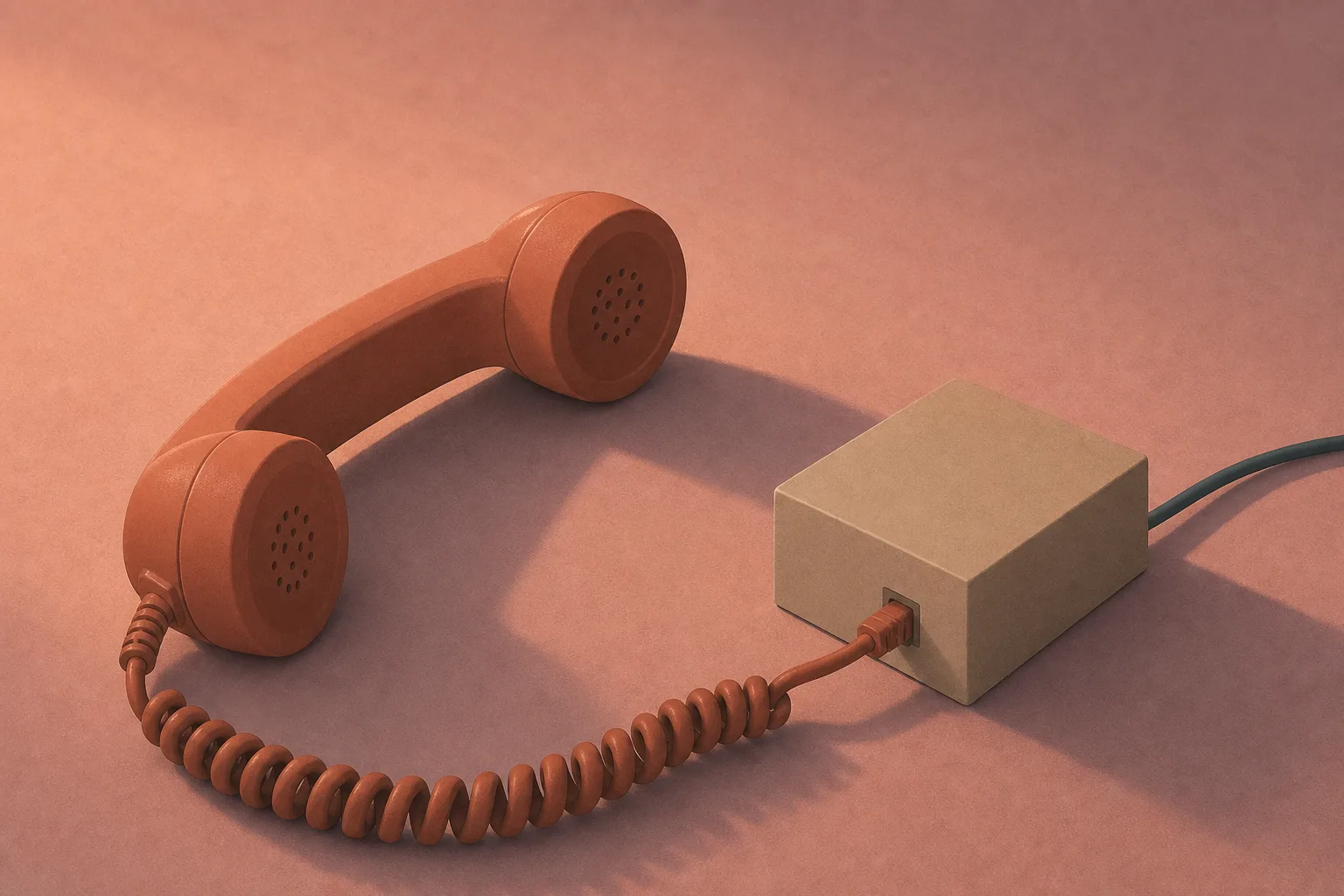
A VoIP home phone is the phone you already own, plugged into the back of your router instead of the socket in the wall. Almost nobody chooses it. It arrives as a letter with a date on it, because the copper telephone network underneath the traditional landline is being switched off and there will be nothing left to plug into. The handset usually stays, the number usually stays, and the call sounds much the same. What changes is what the phone quietly depends on, and that is worth understanding before the letter lands rather than after.
What is a VoIP home phone?
It is a home phone that carries your call as internet data over your broadband line, rather than as an electrical signal down a pair of copper wires. VoIP stands for voice over internet protocol, which is a long way of saying the call travels the way a video call or a web page does.
Providers rarely use the word on the letter. You will see Digital Voice, Digital Phone, Digital Landline or just Home Phone, and underneath the branding it is the same arrangement: the router does the job the exchange used to do. In most homes the change is one physical step, moving the handset cable from the wall socket to a phone port on the router, and the rest happens on the provider's side.
Why is this happening at all?
Because the network the old landline runs on is closing. BT Group is retiring the public switched telephone network, the copper platform that has carried UK phone calls for decades, and Openreach has set the date at 31 January 2027. Everything built on that platform goes with it, which is why older copper broadband services are winding down on the same timetable.
So this is a migration, not an offer. Your provider is not asking whether you would like a phone over broadband; it is telling you when yours becomes one. The question worth spending time on is what to have sorted out before your turn comes round.
Will my phone work in a power cut?
Not on its own, and this is the single real loss in the whole change. A copper landline drew its power down the phone line itself, from the exchange, which is why it carried on working when the lights went out. A phone over broadband depends on your router, and your router depends on the mains.
The rules recognise that. Ofcom's guidance on protecting access to emergency organisations during a power cut says every provider should have at least one solution available that keeps emergency calls possible for a minimum of one hour, and it should be offered to customers who depend on their landline to call for help. In practice that is usually a battery backup unit for the router, provided free to the people who qualify for it.
An hour is a floor, though, not a promise about a long outage. Households in rural areas have been saying so since the migrations began, and they have a point: that is where power cuts last longest and where a mobile is least reliable as the backstop. If everyone in your house carries a phone with a decent signal, an hour is probably plenty. If the signal at your address is poor, that battery is thinner cover than it sounds, and it is worth pressing your provider on what else they can offer. Our guide to telling a fault from an outage covers what else stops working when the connection does.
Can I keep my phone number?
Yes, in almost every case. The migration was designed so that nobody has to lose a number they have had for thirty years simply because the technology underneath it changed, and that applies whether your existing provider moves you across or you take the opportunity to switch to somebody else.
The caveat is worth stating plainly: a number is far easier to keep than to get back. If you are changing provider at the same time as changing technology, say at the start that you want to bring the number, and check it is written into the order rather than promised on a call.
What about a house alarm or a telecare pendant?
These are the devices most likely to break, and they are the reason to act early rather than wait. Care line pendants, monitored burglar alarms, some lift phones and a few medical devices were built to dial out over the analogue line, and a handful of older models will not work reliably over a digital one.
The government's telecare national action plan sets out how people who rely on those devices are meant to be protected through the switchover, and the practical version is two phone calls. Tell your phone provider that somebody in the house depends on a telecare device, which puts you on a different and slower migration path. Then ask the alarm's own supplier or your council's telecare team whether your model is digital ready, because your phone provider cannot answer that for a device it did not supply. If the household includes an older person living alone, our guide to what an older household actually needs goes through the same ground in more detail.
What to sort out before your letter arrives
- Find out where the handset goes. On most routers it is a phone port on the back, often the only one shaped like a phone socket. Knowing which one saves a support call on the day.
- Tell your provider if anyone is landline dependent. No mobile signal, a telecare device, a health condition, or simply nobody in the house who uses a mobile. It is the trigger for the extra protections, and nothing happens until you say so.
- Ask what the power cut solution is, and what it costs. Get the answer as a specific product rather than a reassurance.
- List everything that dials out. Alarm, care pendant, some older heating controls, a monitored smoke system. Each one has its own supplier and its own answer.
- Check your broadband is up to it. A phone over a connection that keeps dropping is a phone that keeps dropping. If yours is unreliable, this is the moment to look at what else your street can get.
What you gain, and what you give up
The gains are real if unglamorous. Call quality over a digital line is generally clearer than over a long copper run, nuisance call blocking tends to be built in rather than sold as an extra, and the separate line rental that funded the copper pair stops being a line on the bill. None of that is why the change is happening, but none of it is nothing either.
What you give up is the one property the old line had that no feature replaces: it powered itself. That is a genuine loss, and a site that told you otherwise would not be worth reading. For most households it is a small one, covered by a mobile in a pocket. For a household in a rural area with poor signal and long winter power cuts, it is not small, and it deserves a straight conversation with your provider rather than a leaflet.
If you are looking at this because your broadband is due a change anyway, it is worth seeing what is actually available at your address first, since coverage is decided street by street rather than town by town. Our availability checker is the quickest way to see the list, and broadband without a landline covers the other route, which is deciding you do not want a home phone at all.
Frequently asked questions
Do I need to buy a new phone?
Usually not. Most providers move you across by asking you to unplug your existing handset from the wall socket and plug it into a phone port on the back of the router instead, and a corded or cordless phone bought in the last couple of decades will normally just work. Some providers sell a handset that pairs with the router directly, which is a convenience rather than a requirement. Ask before you buy anything.
What happens to my phone number?
You keep it. The whole migration is built around nobody having to change their number when they move from the copper network to a phone service over broadband, and that holds whether your provider moves you or you switch to somebody else at the same time. It is still worth getting the answer in writing before you agree to anything, because a number is very hard to recover once it has gone.
Will 999 still work?
Yes, and your address is passed with the call in the same way. The difference is what happens when the electricity fails, because the phone now depends on your router and your router depends on the mains. Ofcom expects every provider to have at least one solution that keeps emergency calls working for a minimum of an hour in a power cut for customers who rely on their landline, and to offer it to the people who need it.
Can I refuse and keep my copper landline?
Not indefinitely. The old network is being retired rather than made optional, so there is a date after which there is no copper phone service to stay on. What you can do is ask for the migration to be handled carefully, particularly where someone in the house depends on the line, and providers have moved slowly and case by case for households in that position rather than switching them over unannounced.
Does it cost more?
It is not sold as an upgrade, and on most price lists the phone service costs roughly what the old one did rather than carrying a new charge of its own. What changes is the shape of the bill: line rental for the copper pair stops being a separate thing, and calls are often bundled differently. Check your own renewal quote against your current bill rather than assuming either way.