
New build broadband: what you can actually get
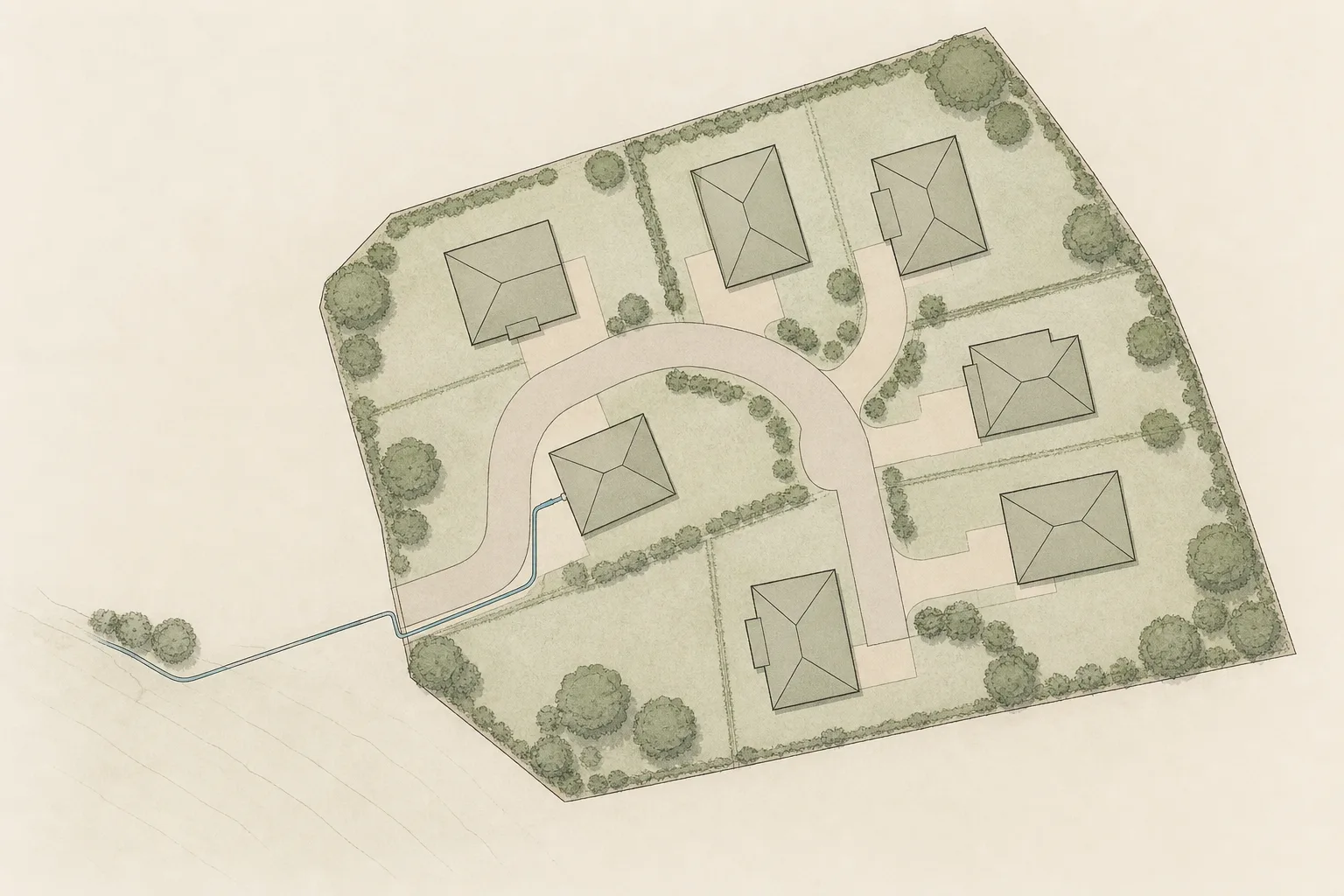
New build broadband is the part of moving into a brand new house that nobody mentions at the viewing. The kitchen is finished, the garden is turf, and then you go to order broadband and find one company listed. Sometimes none. It feels like a mistake has been made somewhere, and usually it has not: a new estate gets the network that was built into it, and the rules covering that decide rather less than most buyers assume. Here is what your developer had to put in the ground, what it does not promise you, and what to ask before you exchange.
Why does a new build often have only one broadband option?
Because only one physical network was built to the estate, and everything else follows from that. Roads get dug once. A developer that has already paid to have ducting laid and a network brought to the site has no reason to invite a second company to dig the same trenches, and the company that did the work has every reason to want the homes to itself for a while.
That is a commercial arrangement rather than a rule, which is why it varies so much between estates that look identical from the road. One development is on the same national network as the street behind it and every familiar name will sell to you. The next is served by a single smaller network nobody in the house had heard of before completion day.
What the developer was actually obliged to install
Since December 2022, new homes in England have been built under an additional part of the building regulations covering the physical infrastructure for broadband. It expects two separate things: the ducting and cabling that a gigabit connection needs, running from the boundary of the plot to a termination point inside the house, and then a gigabit-capable connection itself.
The connection carries a cost cap. Where a gigabit connection cannot be secured for the capped amount per home, currently £2,000, the developer installs the fastest connection that can be had within it instead, which may be a great deal slower. The approved document setting this out is written for developers and building control rather than buyers, but it is short and the connection section is the readable part.
Two limits are worth knowing. It applies in England, and the Welsh Government publishes its own guidance for developments there. And it only reaches homes whose plans went in after it took effect, so a recently finished house on an older permission may never have been held to it at all.
Does gigabit-ready mean the house is connected?
No, and this is the single most common surprise. Gigabit-ready describes the ducting: an empty route from the boundary to the box on your wall, waiting for a network to pull fibre through it. It is what stops the road being dug up again later, and it is genuinely valuable. It is not a live service.
So a house can be fully compliant, fully finished, and still have nothing to plug a router into on the day you move in, because the network has not energised that part of the estate or the order sits in a queue behind the last few plots. The ducting means the wait should be weeks rather than years. It does not mean the wait is nothing.
What new build broadband choice really depends on
Not the rules, and not the developer. It depends on one question: does the network that was built to your estate sell access to other retail providers, or only its own service?
Where the estate sits on the big national wholesale network, the physical monopoly barely matters, because a long list of well known providers all sell over the same wires and you can move between them as normal. Where it sits on a single smaller network, some of those networks wholesale to other providers and some sell only their own package. In that second case one company is the whole market at your address until somebody else builds, and the switching process has nothing to switch you to.
Being on a single network is not automatically the bad outcome. Smaller networks are often faster and cheaper than the incumbent, and several fix their price for the whole contract. The honest version is simply that you have less leverage than a household with four networks in the street, and that is worth knowing before the introductory deal ends rather than after.
What to ask before you complete
The sales office will answer these, and the answers are much easier to get before the money moves than afterwards.
- Which network is built to the plot. Not which provider the show home uses. The name of the network that owns the fibre, because that is what decides everything else.
- Whether the connection is already live. Ask whether service has been energised on your phase, and if not, the date the developer has been given.
- Where the termination point is. The small box the fibre lands on inside the house. Knowing where it is saves an argument about drilling later.
- Whether a second network has agreed to build. Sometimes one has and it simply has not arrived yet, which changes how long you should sign up for.
If the estate is a block of flats rather than houses, the picture changes again, because permission to enter the building is a separate hurdle from anything the developer did. Our guide to full fibre in flats covers who has to say yes.
What can you do if there is no service when you move in?
Take something monthly and disposable. A 4G or 5G router covers the gap without tying you to anything, and our guide on 5G home broadband against full fibre sets out where it holds up and the two protections it quietly does not come with. Check the mobile signal indoors at the property first, because a new build with foil-backed insulation can be worse inside than the coverage map suggests.
Then chase the right people. The developer owns the relationship with the network while the site is still being built, so a complaint to a retail provider about an address it cannot yet see goes nowhere. Ask the site manager for the network reference for your plot, and keep the date you were given in writing.
Where to start
Check the address itself rather than the marketing. Our availability checker will tell you what is actually sellable at a postcode today, and if the plot is too new to be recognised, the neighbouring address is the next best clue. If it comes back with nothing, our guide on when the rollout reaches your street explains which milestones mean you can order and which mean somebody is still planning.
A new build is one of the few times you get to ask these questions before you are living with the answer. It is worth spending ten minutes on it while the developer still wants something from you.
Frequently asked questions
Can a developer leave a new home with no broadband at all?
In England the building regulations expect a home to be built with the ducting for a gigabit connection and, where one can be secured within the cost cap, an actual connection. Where the cap is exceeded the next fastest option available within it goes in instead, so the floor is low rather than absent. The rules also only bite on homes whose plans went in after December 2022, so a house finished last year on an older permission may sit outside them.
Why can I only get one provider on my new estate?
Because usually only one physical network has been built to it. Whether that leaves you with one company or a dozen depends on whether that network sells access to other retail providers. If it does not, its own service is the only service until somebody else builds, and nothing obliges anybody to.
How do I find out which network reaches my new address?
Put the postcode into an availability checker rather than asking the estate agent or the sales office, who are usually describing what was promised at planning stage. If the address is too new to be recognised, try the neighbouring plot or the site entrance, then ask the developer for the network termination point and who the connection was ordered from.
Can I get a second network to build to my street?
You can ask, and it does happen, but nobody is obliged to say yes. A network weighs the cost of digging against how many homes it would win, and an estate already served by somebody else is a harder case to make. Where the ground it would have to cross is still owned by the developer, permission to cross it is another thing that has to be granted rather than assumed.
What can I use while I wait for a connection?
Mobile broadband is the usual stopgap, either a 4G or 5G router or a phone hotspot for the first few weeks. Take it monthly rather than on a long term, because the point of it is to be thrown away the moment the fixed line works. Check the mobile signal indoors at the property before you commit to anything.