
Broadband installation day: what actually happens
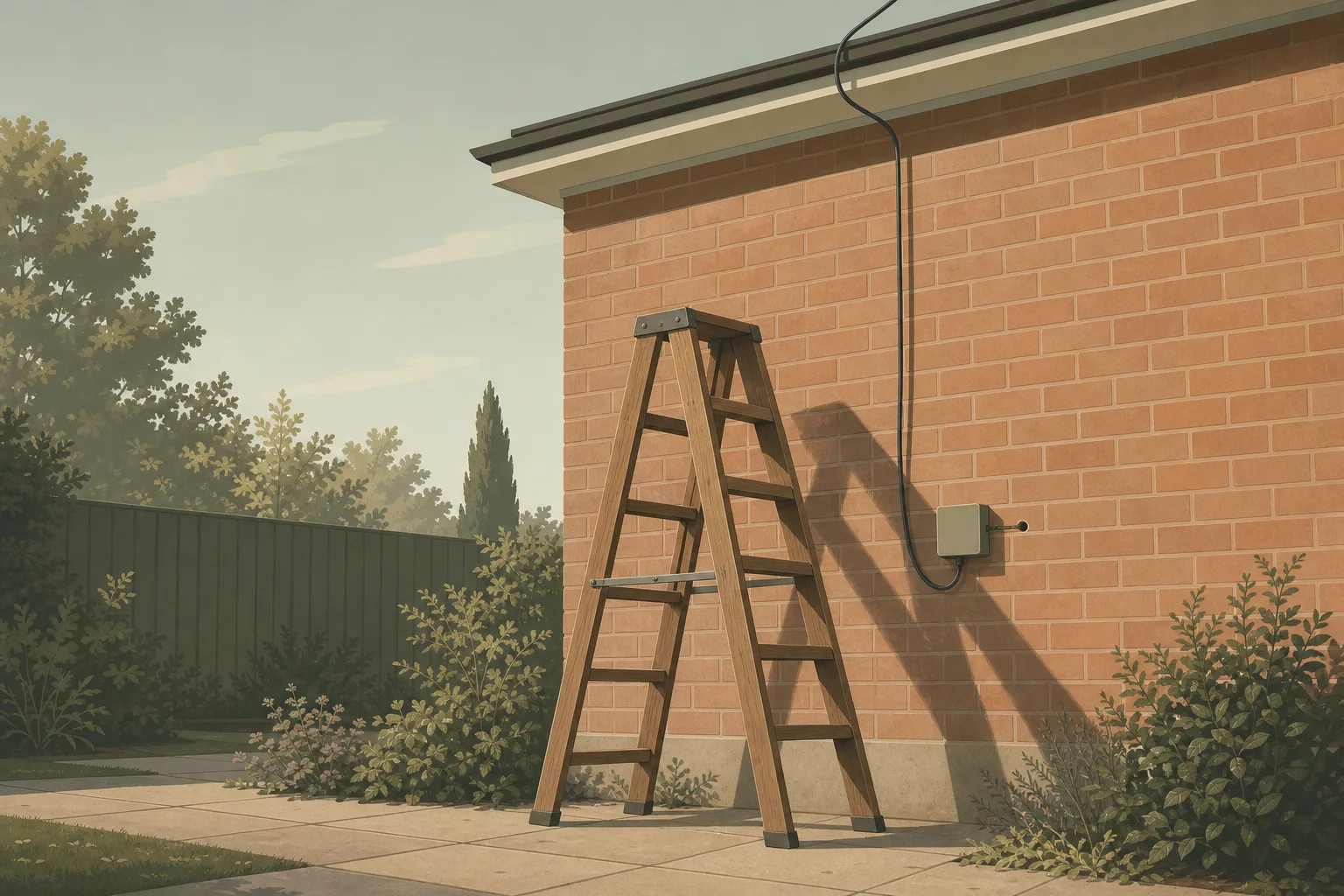
Broadband installation day is the part of switching nobody rehearses. You choose a network, you agree a price, and then weeks later somebody turns up at your house with a ladder and a drill, and a surprising amount of what happens next rests on decisions you will be asked to make on the spot. For most households it is a quiet couple of hours. It is quieter still if you know what the engineer is actually there to do, what they need from you, and where you stand when the job does not go to plan.
What happens on broadband installation day?
An engineer brings a fibre line from the street into your home, fixes a small box to an inside wall, and connects your router to it. That is the whole job, described honestly.
The cable comes either from a telegraph pole or from an underground duct, depending on how your street was built. It ends at a connection point on the outside wall, passes through a small hole, and terminates at a white box indoors, which is the piece of kit that turns light into something your router understands. Our guide to the box the engineer leaves behind covers what it does and why you should not unplug it.
How much of that happens on the day varies. Where a network has already built past your house and prepared the connection, the appointment is short and mostly indoors. Where the network is reaching your street for the first time, more of the work is still outstanding, which is one reason a newer network can take longer to get you connected than a provider reselling a line that has been there for years.
How long does the appointment take?
Usually somewhere between two and four hours, though you will be asked to keep a morning or afternoon slot free rather than given a time. Openreach's own full fibre installation checklist sets out what to expect, and the alternative networks run to much the same shape because the physical job is the same.
The slot is not the length of the work. Engineers often start outside before they knock, running cable or working at the pole, so the visit can begin without you seeing anyone. Equally, a job that needs a blocked duct clearing takes longer than the estimate, and there is no useful way to know that in advance.
Who has to be at home, and what will you be asked?
Somebody aged 18 or over needs to be at the property for the whole slot. That is not simply about letting the engineer in. You are the person who agrees the route the cable takes, where the hole is drilled and where the equipment ends up, and none of those are decisions an engineer can make on your behalf.
So decide before the day. Walk the likely route, work out which room you want the router in, and check there is a mains socket near it. If you rent, or live in a flat, the permission question is a separate one and it needs settling first: our guide on who has to say yes to full fibre in a flat explains what a wayleave is and why a silent freeholder stops the job dead.
The hole in the wall, and where the boxes end up
Two boxes, normally. A small connection point outside where the fibre arrives, and the terminal box indoors that your router plugs into. Between them is a hole roughly the width of the cable, drilled from outside in.
The trade-off is real, so it is worth naming. Engineers work to the shortest safe route, because a long internal run is more to go wrong and more to charge for, and the shortest safe route is frequently not where you would have put it. Hallways. Cupboards under the stairs. The corner behind a sofa. None of that is unreasonable, and it is far easier to discuss before the drill comes out than after, because an engineer told at the start what you would prefer will usually work with it.
What if the engineer cannot finish the job?
It goes back to your provider, who rebooks with the network, and you are typically waiting days rather than hours. This is the genuinely frustrating part, and it happens often enough to be worth planning around.
The usual reasons are physical: a blocked or collapsed duct, no room on the pole, a route that turns out to need digging, or a permission that was never obtained from whoever owns the building. Some of those are a second appointment. Some are a survey, then a work order, then an appointment. Your contract is with your provider rather than the network doing the work, so your provider is who you chase, however clearly the problem belongs to somebody else.
A practical point that saves a great deal of aggravation: do not cancel your existing broadband until the new line is working. A short overlap where you pay twice is cheaper than a fortnight with no connection at all.
What are you owed if the appointment goes wrong?
Under Ofcom's automatic compensation scheme, a missed engineer appointment is worth £32.31, and a new service that starts later than the date you were promised is worth £6.46 for each day it is late. An appointment cancelled with less than 24 hours' notice counts as missed. Those rates applied from 1 April 2026 and are raised each April in line with inflation.
The catch is who has signed up. The scheme is voluntary, ten providers take part, and most of the alternative networks are not among them, although Hyperoptic is. If yours is not signed up you are not without recourse, but you are asking rather than being paid automatically. Our guide to what your provider owes you sets out the rates, who pays them without being asked, and the route that still works when yours is not one of them.
Changing your mind before the engineer arrives
If you ordered online or over the phone, you have 14 days to cancel under the Consumer Contracts Regulations, and that period normally starts the day after you agree the contract rather than the day the service goes live. Citizens Advice sets out how the right works and how to use it in its guide to cancelling a phone, TV or internet contract.
One thing to be aware of, because it surprises people. If you ask for the service to start inside those 14 days, which is exactly what booking an early installation slot means, you can be charged for what has already been provided by the time you cancel. The right to change your mind survives. It just stops being free.
What to do before the day
- Settle the permission first. If you do not own the building, get the owner's agreement in writing before you book, not while the engineer is standing outside.
- Pick the room, then check for a socket. The indoor box needs mains power and the router needs to live near it. Deciding this in advance is the single most useful thing on this list.
- Clear the route. Move whatever is in front of the likely entry point, inside and out, and make sure the engineer can get to the wall.
- Keep the old line running. Do not cancel anything until the new service is tested and working.
- Get the outcome in writing. If the job is not finished, ask for what is outstanding and what happens next before the engineer leaves.
None of this makes the day complicated. It mostly turns a visit you are passively receiving into one you have a say in, which is the difference between a box where you wanted it and a box in the cupboard. If you have not got as far as booking yet, our availability checker shows which networks actually reach your address, and how switching works end to end covers everything that happens before the engineer knocks.
Frequently asked questions
Do I need to be at home for a broadband installation?
Yes, and it has to be somebody aged 18 or over, for the whole of the appointment slot rather than just long enough to open the door. The engineer needs a decision from you about where the cable comes in and where the box goes, and neither is something they are allowed to guess at. If you cannot be there, arrange for another adult to be, and tell them in advance what you would prefer.
Will the engineer drill a hole in my wall?
Almost certainly, unless there is an existing route the fibre can use. It is a small hole, roughly the width of the cable, drilled from outside to bring the line into the room where the equipment will sit. The engineer should show you where they intend to drill and get your agreement before starting. If the answer is no, say so early, because it usually means the job needs rethinking rather than delaying.
Can I choose where the box goes?
Within limits, and the limits are practical rather than arbitrary. The box needs to be near where the cable can safely enter, within reach of a mains socket, and somewhere the router can sit afterwards. Engineers work to the shortest safe route, which is often not the tidiest one from your point of view, so raise it at the start. Once the hole is drilled, moving it is a new job.
How long after installation day does the broadband actually work?
Usually before the engineer leaves, because testing the line is part of the job. Speeds can settle over the first few days as the line stabilises, so an early test is not the final word. If the service is not working when they go, get that written down there and then, along with what happens next, rather than discovering it on the phone the following morning.
What happens if I am renting?
You need the person who owns the building to agree before anyone drills into it, which is a separate conversation from your contract with the provider. In a house that is your landlord. In a flat it is normally the freeholder or the managing agent, and that is where these jobs most often stall. Get the permission in writing before you book an appointment, not after.